
Bioclimatic pergola maintenance: a better dealer handover
Give bioclimatic pergola customers a clear handover: care instructions, accessory details and an accepted product record your service team can use.
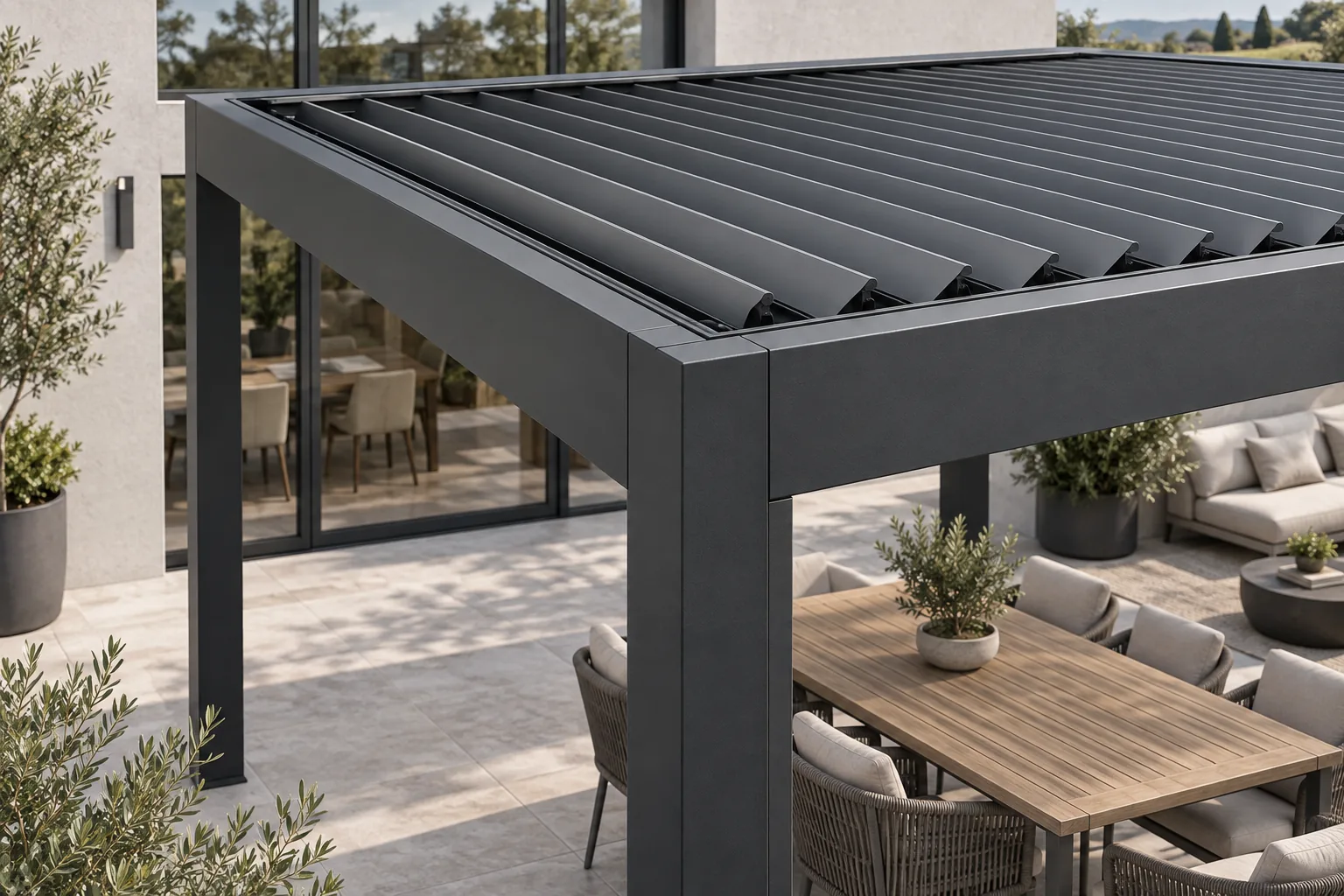
Table of contents
A bioclimatic pergola sale does not end when the roof operates for the first time. The customer still needs to understand the installed system, the care it requires and the information to provide when asking for help. A clear handover makes the product easier to own and gives the dealer a better starting point for after-sales support.
For manufacturers and installer networks, maintenance communication should begin with the actual configuration. Generic advice is less useful when it ignores the selected roof, finish, screens, glazing and controls.
Start with the manufacturer's care instructions
Use the instructions for the installed model and its accessories. Cleaning products, intervals and operating guidance can depend on the finish, local exposure and particular components. A recommendation for one product family should not silently become the rule for every pergola in the catalog.
For example, Biossun's published maintenance guidance recommends gentle cleaning, attention to drainage channels and avoiding high-pressure cleaning on its pergolas. It also relates cleaning frequency to environmental exposure. Those details illustrate why a handover should refer to the correct manufacturer's instructions rather than a universal schedule.
Give the customer a practical way to find the relevant document later. The title, product reference and document revision should be clear enough that support staff can identify what was supplied.
Explain water management without overpromising
Show the customer the accessible areas that the manufacturer says should be kept clear, and explain how to report a drainage concern. Avoid treating a closed louvred roof as a promise of identical performance in all weather conditions.
Where inspection or cleaning would require working at height, specialist access or electrical isolation, direct the customer to appropriate service support. A useful care conversation should not invite somebody to improvise access onto a roof or reach into moving components.
Document a reported problem by its location, the operating state and the relevant circumstances. That gives the installer more information than a general message that the pergola is leaking.
Hand over each accessory as part of the same system
Sliding glass, textile screens and lighting need their own instructions. Demonstrate the agreed operating functions and identify the supplied controls. Record any model-specific limitations and make sure the customer knows where to find them.
For connected controls, define who owns the account or access credentials and who handles later setup changes. Keep sensitive credentials out of widely shared quotation documents. Support should be able to identify the system without requiring unnecessary access to the customer's home network.
| Handover item | What the customer needs | What the dealer should retain |
|---|---|---|
| Roof and structure | Model-specific care and operating instructions | Selected model, finish and dimensions |
| Glass and screens | Correct cleaning and operation guidance | Accessory models and installed sides |
| Motors and controls | Demonstrated functions and support contact | Component references and commissioning record |
| Water management | Safe, permitted checks and reporting steps | Relevant installation details and outlet locations |
| After-sales support | A clear way to identify the project | Approved configuration and subsequent changes |
Keep the accepted configuration useful after installation
An after-sales question is easier to investigate when the team can identify what was sold. Retain the approved specification and record subsequent changes instead of replacing the original with an unexplained updated file.
Configurix connects product configuration with pricing and quotation workflows. For a pergola business, that creates an opportunity to make the accepted product record the starting point for the next team, rather than asking support to interpret disconnected emails and screenshots.
The pergola configurator is the commercial foundation; document retention, integrations and service responsibilities should be agreed around your business process. Do not promise an automated maintenance portal unless it is actually part of the implemented system.
Treat support questions as catalog feedback
If customers repeatedly misunderstand an accessory or operating function, improve the sales explanation and handover material. Check whether the quotation names the component clearly and whether the relevant instruction is easy to find. A recurring question can reveal an information gap before it becomes a wider service problem.
Keep evidence and diagnosis separate. A photograph can show a symptom; it does not by itself establish the cause or responsibility. Route technical judgments to the appropriate service team.
Make ownership part of the sales conversation
A well-presented pergola should be understandable both before and after installation. Introduce care, controls and support expectations while the customer is choosing the product, then hand over the exact documents for the accepted configuration.
For accessory planning, see the lighting and controls specification guide. Manufacturers and dealers looking to connect product choices with clearer commercial records can book a private Configurix demo around their own catalog and handover process.
Connect your pergola catalog to a clearer sales process
See how Configurix can connect your product choices, 3D presentation, pricing and quotations in a private walkthrough.
Book a private Configurix demo →Related articles
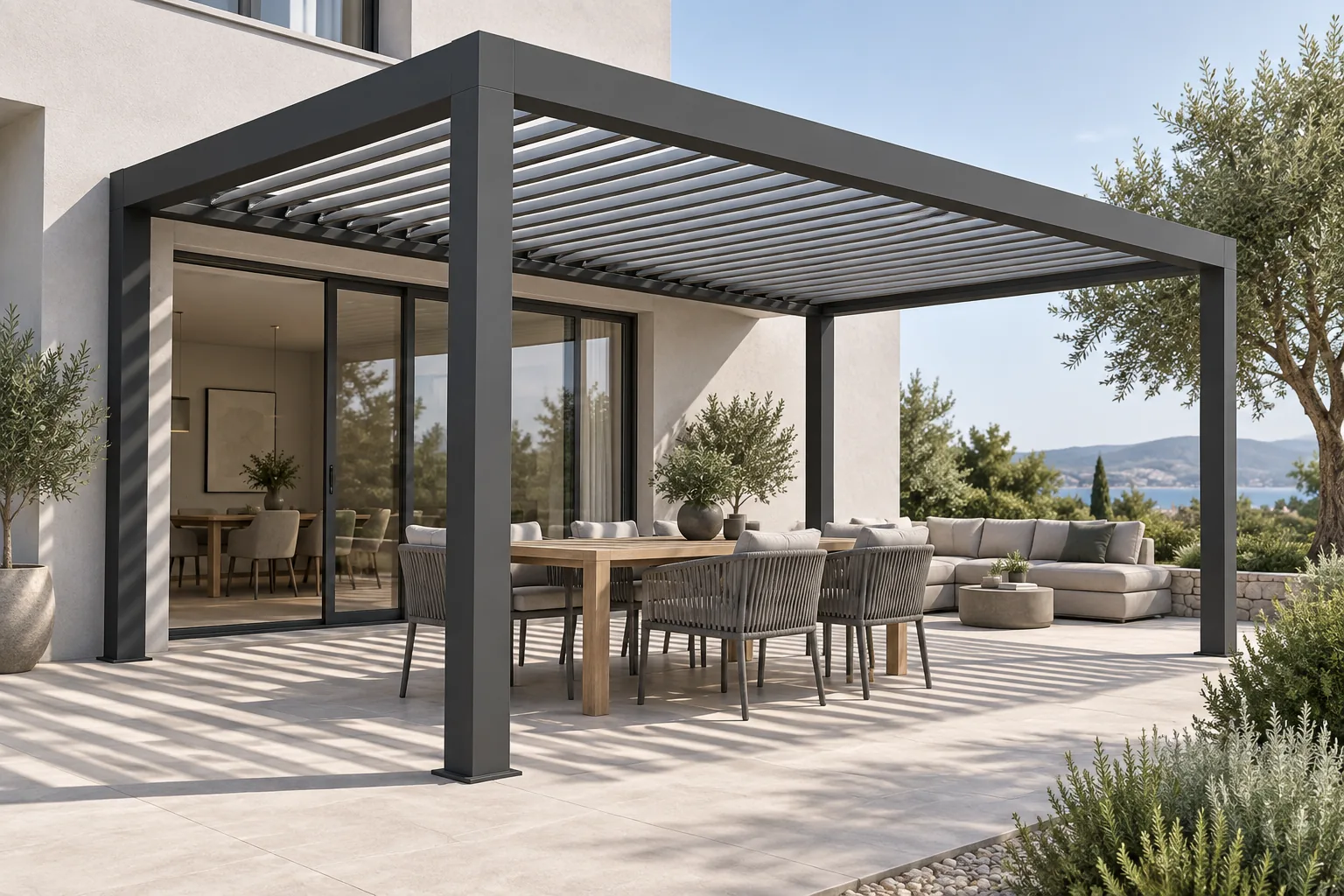
Bioclimatic pergola louvre orientation: explain light and shade
A dealer's guide to bioclimatic pergola louvre orientation, roof movement and shade, with clearer product choices and quotations using Configurix.
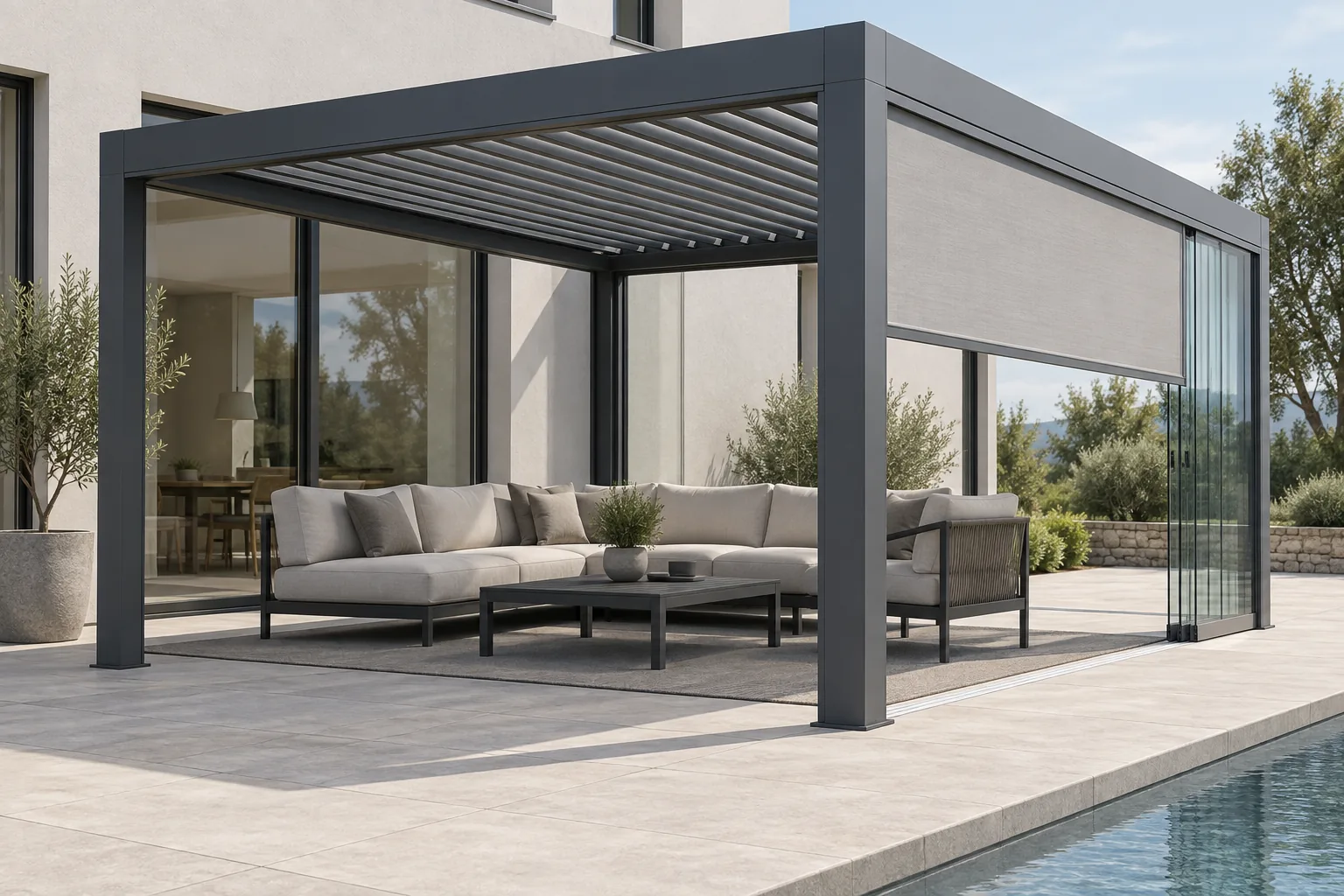
Sliding glass or ZIP screens for a bioclimatic pergola?
Compare sliding glass and ZIP screens by privacy, access and product compatibility. A practical bioclimatic pergola guide for manufacturers and dealers.
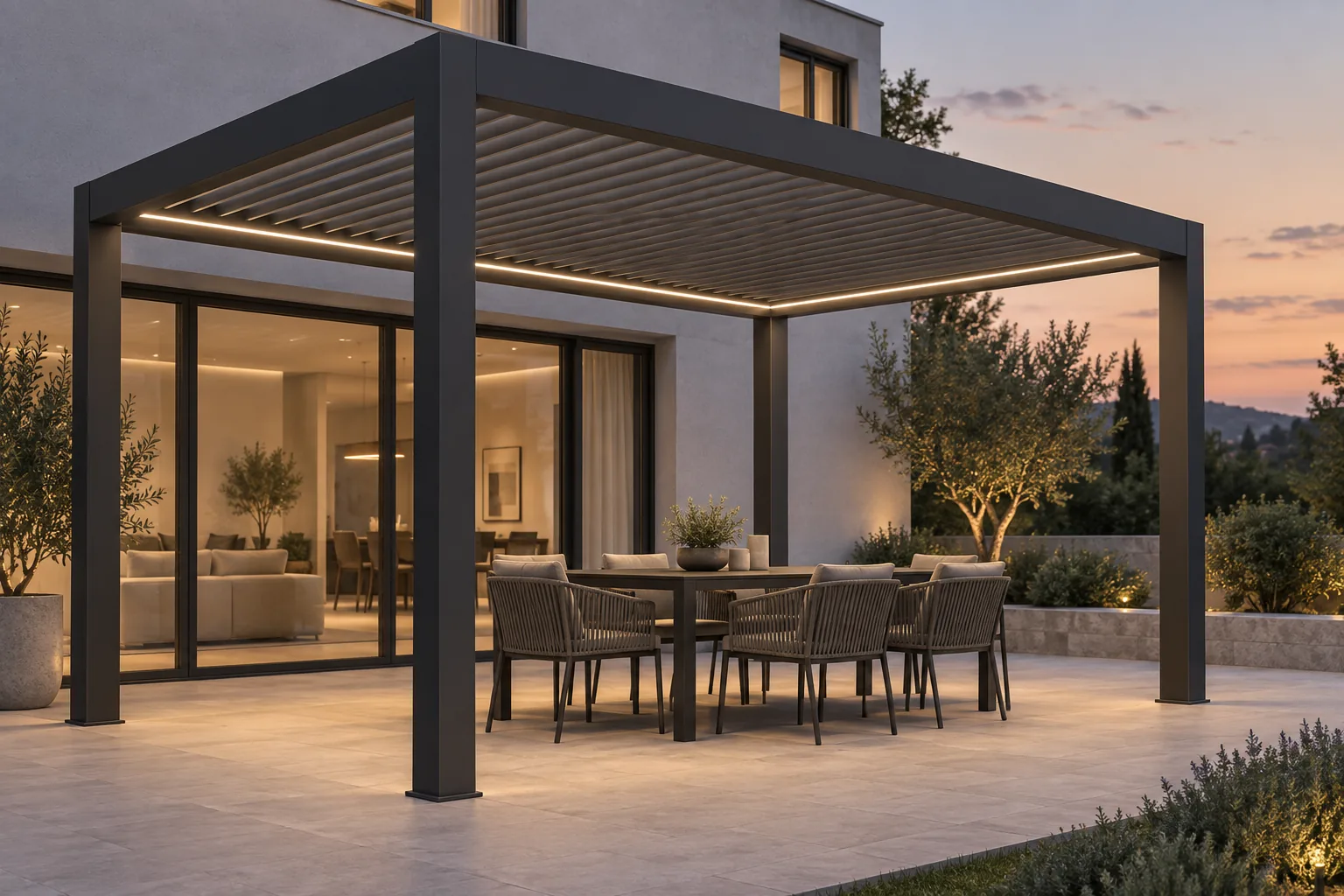
Bioclimatic pergola lighting and controls: specify the complete system
Plan bioclimatic pergola lighting, motors, controls and accessory dependencies. Connect customer choices with clear specifications and Configurix quotes.
Wall-mounted or freestanding bioclimatic pergola?
Compare bioclimatic pergola layouts, post positions, building interfaces and quotation scope. Help customers understand the right arrangement for their site.