International configurator rollout: markets, prices and units
Plan configurator launches across countries: market catalogues, currencies, units, dealer access, quote revisions and reliable lead delivery.
Table of contents
- Define a market profile before copying the catalogue
- Turn regional plans into specific launch questions
- Separate price calculation from currency presentation
- Preserve dimensions when units change
- Give every enquiry an accountable destination
- Carry one accepted revision from quote to factory
- Launch with a small, complete acceptance set
- Do we need separate software for every country?
- Can we launch before all factory integrations are ready?
- What should we send Configurix for a tailored proposal?
Expanding a configurator into another country requires more than translating the buttons. A buyer must see the right product range, understand measurements and prices, and send a specification to a team that can act on it. Start with one question: which commercial decisions change when the selling market changes?
Configurix builds custom configurators and the business software around them. An international project can connect 3D selection, dealer access, quotes, CRM and agreed factory outputs. The useful starting point is a market profile and a completed sales example, rather than a long list of country names on a website.
Define a market profile before copying the catalogue
Keep language, selling market and customer account as separate fields. An English interface does not identify a currency; a translated product name does not create a new component. Assign an owner to each decision and record the version accepted for launch.
| Profile field | Decision and evidence to collect |
|---|---|
| Catalogue | Models, option IDs and combinations available to this market |
| Language | Product terminology, validation, documents and follow-up messages |
| Measurements | Input units, stored units, increments and rounding rules |
| Commercial basis | Currency, approved price list, discounts and quote validity |
| Services | Delivery, survey, foundations or installation included or priced separately |
| Access | Dealer accounts, territories, approval rights and permitted exports |
| Handoff | Receiving team, CRM fields, notifications and acknowledgement |
| Factory record | Configuration revision, component mapping and release authority |
Share product definitions where they describe the same item. Use an explicit market override when a model, finish or accessory is unavailable. Do not hide an unsupported choice visually while leaving it selectable through a saved project or API request.
Turn regional plans into specific launch questions
These are workshop questions, not claims that a country has one universal catalogue or sales process. Your actual customers, distribution agreements and operating systems determine the answers.
| Markets being evaluated | First question to resolve |
|---|---|
| United Kingdom and Ireland | Will GBP and EUR quotes use different price lists, delivery areas and receiving teams? |
| Spain, Italy and Portugal | Who approves local product terminology, customer documents and mobile enquiry handling? |
| Netherlands, Belgium and Austria | Can dealers share a product catalogue while retaining their own prices and access rights? |
| Poland, Switzerland and Nordic countries | Which languages, currencies and revision-controlled documents does each account need? |
| United States and Canada | How will metric and imperial entries produce the same accepted component dimensions? |
| Mexico and Brazil | Which local terms, number formats and CRM or ERP fields must survive the complete sales handoff? |
| Australia and New Zealand | How are site notes, delivery scope and enquiries outside the sales team's working hours handled? |
| Gulf countries and South Africa | Which interface languages, dealer territories and installation-review steps belong to the first release? |
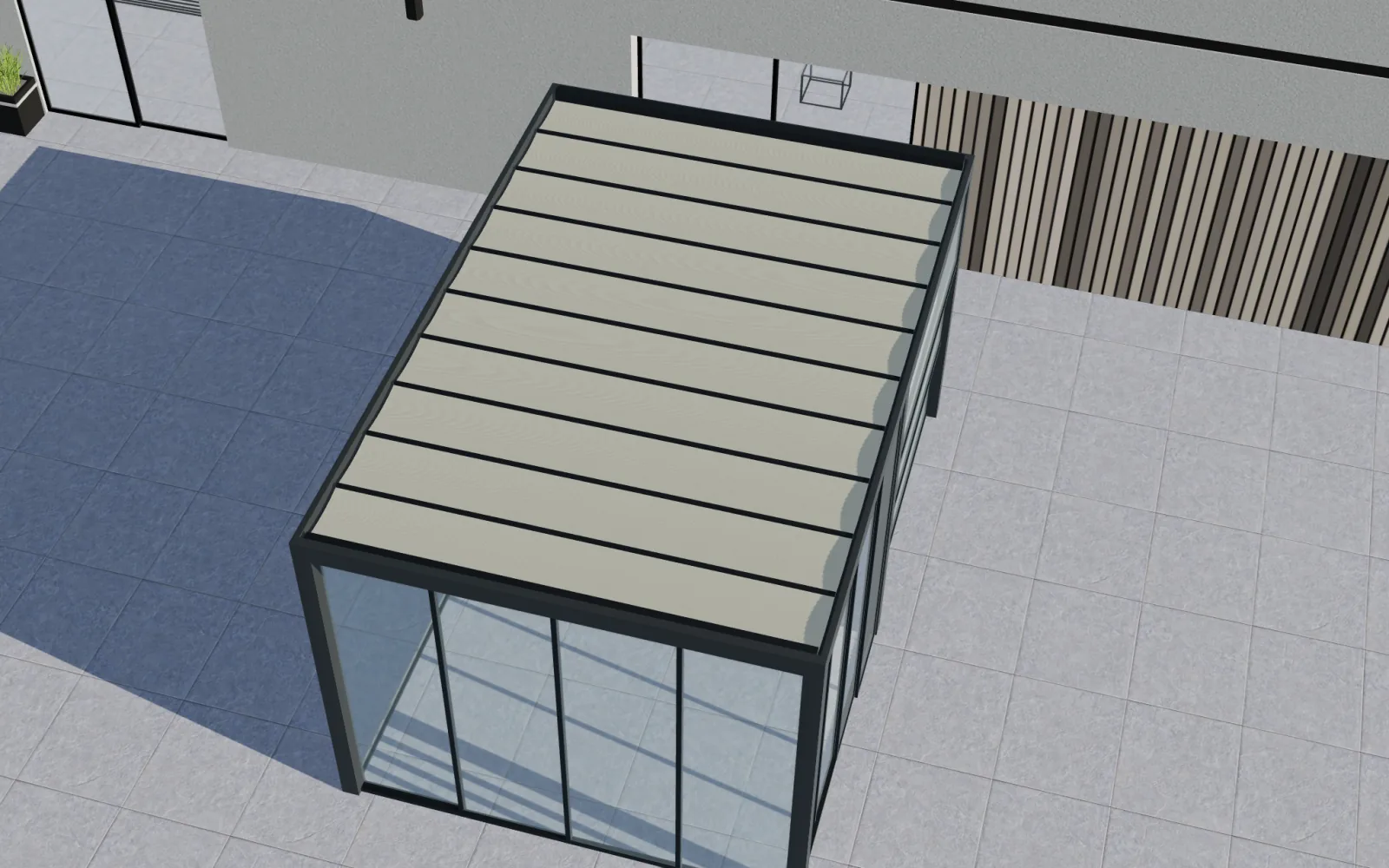
If Arabic or another right-to-left interface is required, make layout, measurement entry and document review part of the agreed scope before committing to launch. A translated menu alone is insufficient. For a more focused product example, read the France awning and pergola rollout guide.
For building-product manufacturers in North America or the German-speaking markets, start with the product’s own opening rules, dimensions, pricing and manufacturing handoff. Explore the door configurator, window configurator and garage door configurator for practical product-specific requirements.
Separate price calculation from currency presentation
Choose the system that owns the price. A converted display amount is not automatically an approved local selling price. Market-specific costs, dealer discounts, freight and service charges may require different price lists. Record the currency code and price-list version on the quote; a currency symbol alone can be ambiguous.
Agree which amounts are included, excluded or awaiting review. Tax treatment and invoice requirements must come from the responsible business system and advisers. The configurator should request or calculate only the agreed values, preserve the result and expose failures instead of silently issuing a zero-tax or incomplete quote.
Unicode CLDR documents regional number and currency formatting. Use the selected locale for presentation, while retaining structured amounts and currency codes for downstream systems. Test decimal separators, pasted values and exported documents, not just the visible total.
Preserve dimensions when units change
Define a canonical stored unit and an allowed precision for each measurement. A customer-facing inch value and a production millimetre value should represent one accepted dimension. Repeated conversion and rounding must not gradually change an order.
Test a minimum size, maximum size, fractional entry and value near an option boundary. Change the display units, save, reopen and inspect the exported specification. An available frame, panel or fixing should not disappear merely because its dimension was rounded for display. Keep input validation and manufacturing calculations tied to the same product rules.
Give every enquiry an accountable destination
Decide whether enquiries route by market, delivery area, product range or dealer account. Record the reason for that assignment. A sales representative should receive the configuration reference, customer contact details, selected options and unresolved site questions together.
Test both the saved lead and its notification. A successful form screen does not prove that an email arrived or a CRM record was accepted. Use a visible delivery state, a responsible fallback team and a retry process that cannot create duplicate enquiries. For overseas teams, define working-hour expectations and follow-up ownership without inventing an instant-response promise.
Carry one accepted revision from quote to factory
A saved configuration should identify the catalogue and rules used, the market and account, the selected references and the commercial version. Reopening an old project must not silently substitute a new price list or unavailable component.
Decide whether a changed product remains quoted at its accepted revision or needs a fresh review. Map the approved record into the required BOM or factory output, with explicit ownership of engineering and manufacturing release. Website translation should never rename the component IDs used by the factory.
Launch with a small, complete acceptance set
Before adding another market, run the same end-to-end cases with its intended users:
- A normal product produces the expected specification and quote.
- An unavailable market option cannot be ordered through a resumed project.
- A language change preserves selected IDs, values and account permissions.
- A unit change round-trips without altering the accepted dimensions.
- An old quote retains its version or enters a clearly identified review step.
- A failed notification or system handoff is visible and recoverable.
Measure completed enquiries, valid specifications, response times and quote progression by market. Investigate where users abandon the journey before expanding the catalogue. A defined implementation scope should name the first products, markets, owners, integrations and acceptance records.
Do we need separate software for every country?
Not necessarily. Shared product logic can support explicit market profiles. Separate deployments may be appropriate when operational, hosting or integration requirements differ; decide from those requirements rather than the number of languages.
Can we launch before all factory integrations are ready?
Yes, with an agreed boundary. A first release can capture reviewed quote requests while the team retains a manual production step. Make the receiving record complete and assign responsibility for that step before launch.
What should we send Configurix for a tailored proposal?
Bring a representative product, two market scenarios, current price sources, a completed quote and the record the next team expects. Include one exception. These examples let us define the configurator and custom software together, with a testable first release.
Plan your international launch
Bring one product, two market scenarios and a completed quote. We will define the configurator, custom software and first acceptance checks.
Discuss your rollout →